
like us!
recent blog posts
- Top 10 Tips for Safe Cycling
- How to Keep a Healthy Closet
- Empty Nest Redux: Saying Good-bye to the Family Home
- Military Service and Life Insurance
- Tidy Up Your Kitchen Pantry
- Olympic Medalist Faces New Opponent: Spring Allergies
- Genetic Testing and Breast Cancer: What You Need to Know
- Mushrooms and Your Health: You Either Love Them or Hate Them, but Here Are Reasons to Try to Love Them
- Don't Let Food Allergies Keep You Away From Summer Cookouts
- Helping Patients Navigate Social Security Disability Issues
Tuesday, Apr 12th 2011
Should You Have a Living Will?
One of the reasons I love writing about health is that it gives me the opportunity to learn about all the various things I've always wondered and been curious about—and then share what I've learned. Like why I can't hear as well as I used to and how to rev up my metabolism. I've been fortunate to cover many other topics of interest—sometimes numerous times, with a different twist—in my three years of writing this blog.
But there is one topic that I've ignored and never once tackled. I try to keep the tone of this blog light and fun. Yet, I think it's time for this serious topic.
It's a topic that makes me uncomfortable and even a bit sad, and I know I'm not alone in this feeling. In fact, the vast majority of Americans—a staggering 70 percent—are so uncomfortable with it that they have ignored it, too. But it's one of those things that is really too important to keep sweeping under the rug.
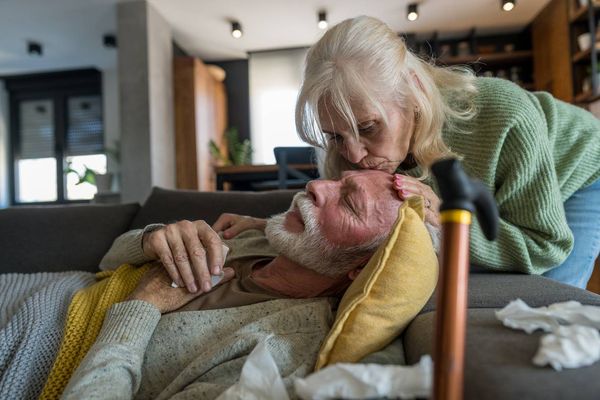
The topic? Advanced directives, also known as living wills. An advanced directive is a legally binding document that details your end-of-life requests in case you cannot speak for yourself. Imagine you are injured in a car accident and end up in a vegetative state. Or you have a terminal illness. There are myriad decisions that have to be made (what kind of care and/or intervention do you want?) but you are no longer a participant in those decisions, so the burden falls to your closest family member(s). Yet, they have no idea what you would have wanted since you did not have a living will in place. Your wishes might have differed markedly from theirs, but now they are left with the responsibility. Often, it's just guesswork.
A study in the Annals of Internal Medicine in February highlighted the negative emotional effect of that scenario and found that at least one-third of the end-of-life decision makers suffered substantial negative emotional effects, lasting well beyond the actual event. There are a few emotions I can think of—among them guilt, doubt, stress and worry. If you've already been through it with a loved one, I'm sure you can add many of your own.
April 16 has been designated as National Healthcare Decisions Day and it's a timely reminder and opportunity for all of us to pay attention and learn. This is a collaborative effort of more than 100 national and over 1,000 state and community organizations to encourage all adults in the United States with decision-making capacity to communicate and document their health care wishes.
The effort has been recognized by corporate America, too. Amedisys, the nation's leading health care and hospice company, educates its 16,000 employees with seminars. It distributes the Five Wishes booklet (a living will) to every one of its employees. I'm grateful for the discussion guide they've supplied to use as a reference while broaching this often difficult subject:
• Discuss Potential Scenarios: Talk with your physician and loved ones about the numerous medical scenarios and procedures you or your loved ones could face. Then, decide on the specific medical treatments you do or do not wish to receive. In addition to an advance directive, you can work with your doctor to sign a Physician Order for Life-Sustaining Treatment (POLST) to make clear what treatments you do and do not want to receive.
• Choose a Medical Power of Attorney: Specify one person who will have the power to make health care decisions for you in the event you cannot make the decisions yourself. This person is often referred to as your "health care agent." You should choose someone who will advocate for your wishes, not their own. Document the identity of your health care agent in writing and discuss with your loved ones. Your advance directive will be this person's guide for making health care decisions for you, should you become unable to make decisions for yourself.
• Decide on a Level of Medical Intervention: In your advance directive, choose a level of medical intervention that you are comfortable with. Some patients simply want pain management; others may seek a moderate level of medical involvement (such as artificial hydration or antibiotics); while others will request that all life-sustaining measures be used (such as CPR and artificial resuscitation).
• Explore the Gift of Hospice: Document whether you'd like to receive hospice care, also known as palliative care. This pain management and end-of-life care provides comfort, dignity and quality of life to those facing a life-limiting illness, as well as support for their loved ones. You can learn more about hospice care at www.amedisys.com.
• Communicate the Location of Documentation: Tell your loved ones about how and where your advance directive can be located in the event of a medical emergency. Some, but not all, states offer databases where an advance directive can be accessed when the patient does not keep a physical copy on him/her. Other states may not have this option, so it is important that you tell your loved ones the location of your advance directive. Note: a POLST will stay with your medical records.
• Talk With Your Medical Provider: After you document your wishes in an advance directive, talk with your health care provider(s) about your wishes. It's important to note that some states legally permit medical staffs to deny care that conflicts with their ethical values, even if that means not delivering the care you want. If this is true in your state, talk to your doctor and an attorney about how your wishes can best be carried out.
• Involve Your Attorney: Meet with your attorney to help you define your wishes in an advance directive and document them appropriately.
• Research State Laws: If you'd like to look at an advance directive that is legally recognized within your state, before talking with an attorney, resources are available at: www.nhdd.org.
Other pertinent reading:
Basic Legal Healthcare Tools
Start Talking About Life's End Well in Advance
Comments
Apr 14, 2011 10:Apr 10 | sarah henry said
I'm with Ruth: Sure it's a
I'm with Ruth: Sure it's a sad subject, but far sadder not to let your wishes be known to your family, if it should come to that. Good for you for tackling the tough subjects too.
Apr 14, 2011 07:Apr 7 | Living Large said
Living Wills
A very important topic and I'm a big advocate of them. My husband and I have always had wills and living wills. When I was 17, my father died at the age of 58. I'll never forget the decision my mother had to make to turn off the machines, not knowing really, what he would have wanted. She had a living will and when the time came for her, it was a decision that she had already made with her doctor and clergy. They were both there with me and I felt a great sense of relief for not having to make that decision. I surely wanted more time with her and may have acted on those emotions rather than in her best interest.
Apr 14, 2011 08:Apr 8 | Sheryl said
Nice to see you here, Living
Nice to see you here, Living Large. And your comment is so helpful and such a timely reminder of the value of having a living will; thank you. So sad about your dad - and how difficult that had to be for your mom to make that decision without an idea of what his wishes would have been. I'd imagine that although your mother's passing was so sad, it was made easier somehow by not having to make such a difficult decision.
Apr 14, 2011 00:Apr 12 | Jane Boursaw said
Yes, absolutely. Everyone
Yes, absolutely. Everyone should have a living will. It really helps to alleviate the pressure during a really stressful time. I vote for planning everything out re the funeral, too.
Apr 14, 2011 09:Apr 9 | Sheryl said
Jane, My parents are in the
Jane, My parents are in the process of making sure all their funeral plans are in place. Sad thought, but as you say, it does help alleviate the pressure on others during such a stressful time. Making decisions when you are stressed and grieving is nearly impossible.
Apr 13, 2011 23:Apr 11 | Merr said
As an LCSW I have had many
As an LCSW I have had many MANY talks with patients and families about this exact topic. It's a delicate, personal subject - and opinions can change which is why it's good to remember that your document can change (because you can change it!) as well.
Apr 14, 2011 08:Apr 8 | Sheryl said
Thank you so much, Merr, for
Thank you so much, Merr, for pointing this out - that the document can be changed. I think that's something that most people (including myself)don't think about or realize.
Apr 13, 2011 18:Apr 6 | Alisa Bowman said
My husband and I took care of
My husband and I took care of all of this when we became parents. I'm glad we did. I would never want to leave our daughter or others who don't know us as well to make those decisions. Just not fair to them to be guessing.
Apr 13, 2011 17:Apr 5 | ruth pennebaker said
living wills
So glad you're addressing this. Yes, it's sad -- but the thought of not making your wishes known to your family is far sadder.
Apr 14, 2011 09:Apr 9 | Sheryl said
It is sad to think about your
It is sad to think about your family having to make such a difficult decision, Ruth. Much sadder.
Apr 13, 2011 13:Apr 1 | Vera Marie Badertscher said
I have been reluctant to sign
I have been reluctant to sign an advanced directives for several reasons. One is that there are so many options out there, and unless you've been faced with them, and know the exact circumstances, it is almost impossible to make an intelligent decision in advance.
Second, medical advances move so fast, that something that does not make sense today may be perfectly logical tomorrow.
I don't THINK my delay is because I'm afraid to face facts. My parents had advanced directives, but when my father was in an ER and the doctors were not communicating honestly with us, we had a very difficult time deciding what was the right thing to do.
Not a simple matter at all.
Apr 14, 2011 08:Apr 8 | Sheryl said
Absolutely not a simple
Absolutely not a simple matter, Vera. And I agree that things change so fast that it can be both intimidating and difficult to navigate and anticipate the medical landscape. But given the alternatives, I think at the very least putting something in writing may pave the way for decisions to be made along a certain path where they might not have gone otherwise.
Apr 13, 2011 13:Apr 1 | Roxanne said
Actually planning to do this
Actually planning to do this soon ... after learning (the hard way via ongoing eldercare issues) how important it can be.
Apr 14, 2011 08:Apr 8 | Sheryl said
Yes, many times we have to
Yes, many times we have to learn the hard way. Glad you are taking the step, Roxanne.
Apr 13, 2011 13:Apr 1 | Kristen said
This is such an important
This is such an important topic. My husband and I put our living wills together years ago. I researched it quite a bit but I'm still not sure that our living wills would be carried out, despite the signed, attorney-reviewed, certified document. My grandfather had DNR orders but that didn't stop health care providers from going ahead and taking heroic measures. I don't fault the doctors but it was a terrible experience for him and my grandmother. I guess my point is--and I'm no expert here--that you can't count on the document ensuring that your wishes are followed. You're right that taking all of the additional steps you can, that you've mentioned here, should help.
Apr 14, 2011 08:Apr 8 | Sheryl said
That is indeed an upsetting
That is indeed an upsetting story about your grandfather. So sorry to hear that. But in light of that, I'd say that having something in writing will hopefully steer most health professionals in the right direction.
Apr 13, 2011 12:Apr 12 | Kris @ Attainable Sustainable said
I'd love to know if there's a
I'd love to know if there's a simple form or template that can be used to create a legally binding living will.
Apr 14, 2011 08:Apr 8 | Sheryl said
Yes, agreed, a template will
Yes, agreed, a template will make things so much easier for so many.
Apr 13, 2011 12:Apr 12 | Jennifer Margulis said
Thank you for tackling this
Thank you for tackling this important subject, even though it makes you sad. We all absolutely need to think about these things! Having a living will is really really important. I'm so glad you brought it up here.
Apr 13, 2011 12:Apr 12 | Stav said
"The Talk"
It is so important that we, as a family, have important discussions about health and death issues, no matter how unpleasant it is. Visiting Nurse Service of New York blogger and RN Amy Dixon Drouin wrote about having "The Talk" with her mother which gives such great insight. Check out her piece at http://blogs.vnsny.org/2011/04/05/the-talk/
Apr 14, 2011 09:Apr 9 | Sheryl said
Thanks for visiting, Stav,
Thanks for visiting, Stav, and for the link. You are right; having these discussions, no matter how difficult, are vital.
Apr 13, 2011 10:Apr 10 | Alexandra said
This is so timely in our
This is so timely in our community! A neighbor finally got her son to move home and built a little house for him to live in on her property. One month later, she had a stroke and is now in rehabilitation. She is 84 but never thought this type of thing would happen to her. She intended to take care of her son! Now he is faced with making decisions for her. I sure hope she wrote a living will before this situation happened. Thanks for this reminder that we should all have a living will, no matter what age we are.
Apr 13, 2011 09:Apr 9 | Susan said
This has been on my mind
This has been on my mind lately, but I'm curious at what age you think one should initiate this process. Or is that an individual decision? Obviously, the younger you are, one would hope that you wouldn't have to worry about this as much. Then again, you never know when you could get injured in a serious car crash or contract a terminal illness.
Apr 14, 2011 09:Apr 9 | Sheryl said
From what I have learned it
From what I have learned it is an individual decision. And when you're so young, it's even more difficult to think about things like this. But as you say, anything can happen and you never know. So I'd say you're never too young to communicate your wishes.
Apr 13, 2011 09:Apr 9 | NoPotCooking said
Apr 14, 2011 08:Apr 8 | Sheryl said
Excellent point; thanks for
Excellent point; thanks for pointing that out. That makes perfect sense.