Visit our Brain Health Hub.
June is Alzheimer’s and Brain Awareness Month.
Alzheimer’s disease can be ruthless. In its advanced stages, it can rob you of your memory, your personality and the ability to respond to your environment, carry on a conversation and, eventually, control your movement. But recent scientific advancements are offering new hope to millions of people living with Alzheimer’s in its earlier stages, when symptoms are unnoticeable or still mild.
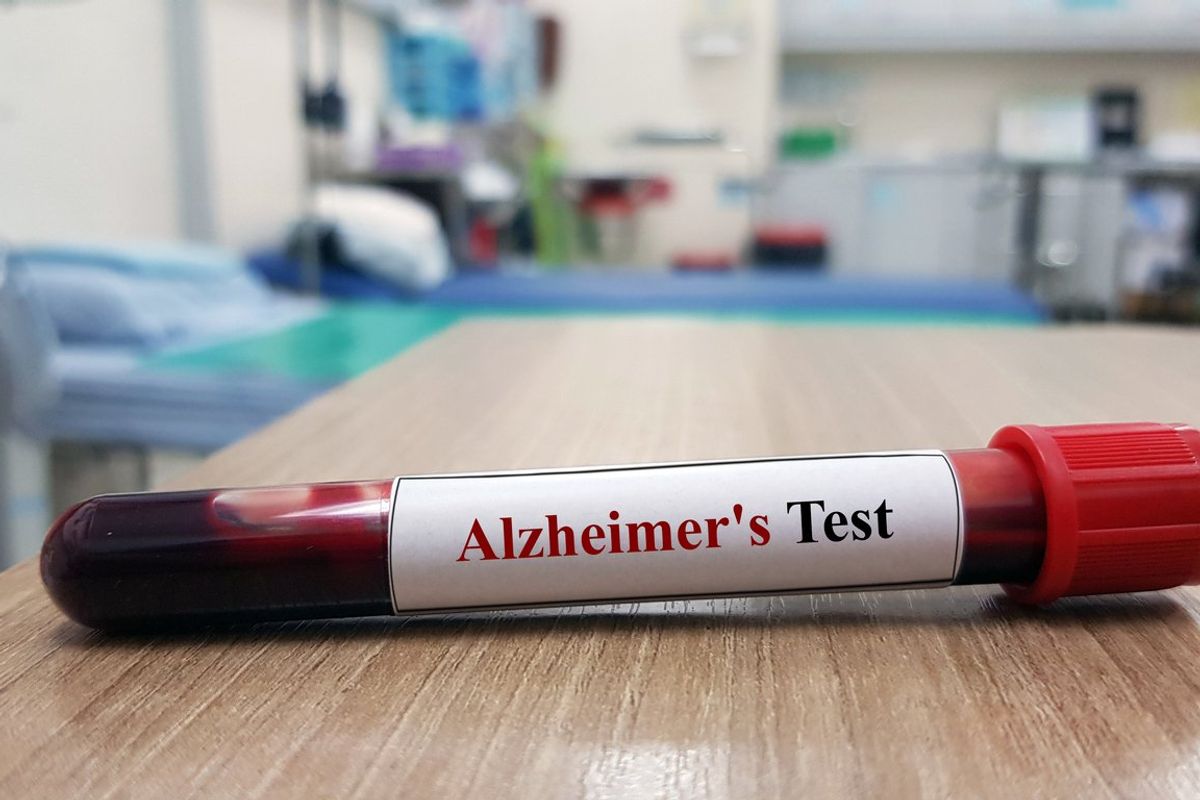
FDA-cleared blood tests can be used to help rule out or diagnose Alzheimer’s in its earlier stages. Earlier diagnosis means treatments can be used to slow the progression of the disease in most cases, giving you more time to enjoy your life and plan for your future.
Here’s what you need to know about blood tests for Alzheimer’s.
Take our quiz: How Much Do You Know About Alzheimer’s Disease? >>
Blood test for Alzheimer’s
Last year, the Food and Drug Administration (FDA) cleared two blood tests that check for recognized markers of Alzheimer’s disease: beta-amyloid proteins and phosphorylated tau (p-tau) proteins.
This means a simple blood test can be used as an initial diagnostic tool without compromising results. The blood test can help healthcare providers determine if you need a spinal tap or PET scan as a follow-up.
The first blood test, Lumipulse G pTau 217/β-Amyloid 1-42 Plasma Ratio, was cleared by the FDA in May 2025. The test measures pTau217 and beta-amyloid 1-42 proteins in plasma to detect the presence — or absence — of amyloid plaques in the brain. Amyloid plaques are a key indicator of Alzheimer’s disease.
In one clinical study, more than 9 out of 10 people received the same result from the Lumipulse blood test that they did with a PET scan or by testing cerebrospinal fluid (CSF) from a spinal tap.
The second test, Elecsys Phospho-Tau (181P) Plasma, was cleared in October 2025. The blood-based biomarker test measures levels of the protein pTau181 in blood plasma. Negative results indicate no sign of amyloid pathology associated with Alzheimer’s disease. So if you’re experiencing cognitive decline but are unlikely to have Alzheimer’s, you can use that information to help find out what else is causing your symptoms.
The role of blood tests for Alzheimer’s disease
It’s important to note both blood tests are designed to be used alongside other clinical information to assess adults 55 and older who show signs of mild cognitive impairment, such as memory loss or problems with thinking or learning.
They are meant to help diagnose or rule out Alzheimer’s as part of a comprehensive process. They do not diagnose Alzheimer’s alone.
A definitive Alzheimer’s diagnosis is still based on multiple testing results from brain imaging, memory tests and biomarker tests — among other factors.
Lynn M. Bekris, Ph.D., principal investigator at the Cleveland Clinic’s Lynn Bekris Lab, said the multiple diagnostic tests are better together than alone. “This more detailed evaluation will rule out or rule in Alzheimer's disease with the highest accuracy and is needed before the type of Alzheimer's treatment is selected by both patient and their doctor,” she said.
Hope on the horizon
The FDA-cleared blood tests are a big step in the right direction when it comes to improving quality of life for people living with Alzheimer’s disease. There’s still no cure, but an earlier diagnosis means you can start implementing lifestyle changes like exercise, healthy eating and mental simulation and get treatments that can slow the progression of the disease and help with symptoms. Some of these treatments are only available when Alzheimer’s is in the earlier stages. So early diagnosis is crucial for getting the best outcomes.
If you’re experiencing symptoms of cognitive decline and you’re 55 or older, talk to your healthcare provider to see whether one of the new Alzheimer’s blood tests is an option for you.
- New Hope in the Fight Against Alzheimer’s ›
- Alzheimer's Disease ›
- How is Alzheimer's disease diagnosed? ›
- Facts About Women and Alzheimer's Disease - HealthyWomen ›
- Biomarkers 101 - HealthyWomen ›